The 2026 Real Estate Tech Stack: Tools That Actually Close Deals
Real Estate Tech Stack
In our previous article, "Mastering Your Schedule," we explored how top-producing Pennsylvania agents protect their time by implementing the "Golden Hour" and batching their tasks. But as you reclaim your time, a new challenge emerges: how do you manage the increased volume of leads and relationships without dropping the ball?
As an educator and coach at Philadelphia Real Estate Classes, I see agents make the same expensive mistake every year. They assume that buying more software will automatically generate more revenue. They subscribe to five different platforms, only to find themselves overwhelmed by notifications, duplicating data entry, and ultimately abandoning the tools they are paying for.
In 2026, the most successful agents aren't those with the most tools; they are the ones with the most
integrated tools. The industry has shifted away from disjointed software and toward strategic simplicity [1]. This guide will walk you through the essential components of a modern real estate tech stack and how to audit your current systems to ensure they are actually helping you close deals.
The Problem with "App Fatigue"
The real estate technology landscape is crowded. It is incredibly easy to fall into the trap of "app fatigue"—adding a new subscription every time you hear a colleague mention a tool that worked for them.
The result is a fragmented workflow. If your lead generation tool doesn't speak to your CRM, and your CRM doesn't speak to your transaction management software, you are spending your valuable "Golden Hour" doing manual data entry instead of calling clients.
"The best-performing agents are shifting away from 'more software' and toward strategic simplicity. Instead of chasing every new app, they’re focusing on building a lean tech stack that works together, automates repetitive tasks, and supports their biggest goals for the year ahead." - Realtor.com [1]
The Core Pillars of a 2026 Tech Stack
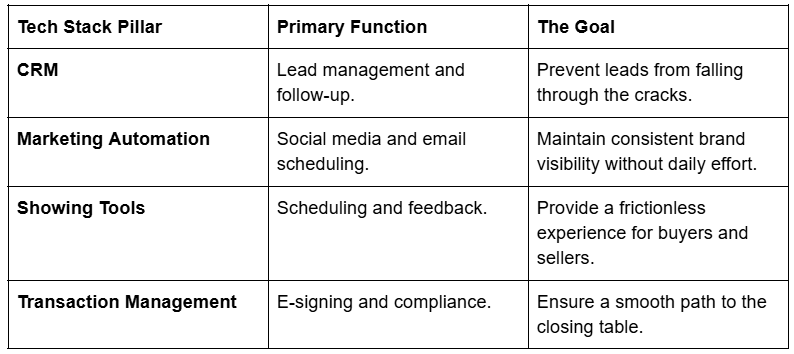
To build a sustainable business, you need a lean, interconnected suite of tools. Every piece of software you pay for should fit into one of these four core pillars.
1. The Command Center: A Smart CRM
Your Customer Relationship Management (CRM) platform is the heart of your business. It is not just a digital address book; it is an automated follow-up engine. In 2026, a modern CRM must go beyond storing phone numbers and birthdays.
What to look for in a modern CRM:
- Automated Lead Routing: The ability to instantly capture leads from Zillow, Realtor.com, or your website and assign them to specific follow-up campaigns.
- AI-Assisted Summaries: Tools that can read a text thread and summarize the client's current needs, saving you time before a phone call.
- Deep Integrations: Your CRM must integrate seamlessly with your email provider, your calendar, and your local MLS.
At Philadelphia Real Estate Classes, we use
LocalVantage.us as our all-in-one CRM and marketing platform. What we value most about it is that it consolidates lead capture, automated follow-up, scheduling, Mobile-friendly e-signing, Secure document storage, and social media scheduling into a single, unified dashboard — directly addressing the "app fatigue" problem we described above. Instead of managing four separate subscriptions, agents can run their entire client communication strategy from one place.
2. The Conversion Engine: Automated Marketing
Consistency is the key to building a personal brand, but manually posting to social media and writing weekly emails is incredibly time-consuming.
A strong marketing automation tool allows you to batch your content creation. You can sit down on a Sunday evening, draft your Market-Educate-Connect posts for the week, and schedule them to publish automatically across Instagram, Facebook, and LinkedIn. Furthermore, AI-powered writing assistants like ChatGPT or Canva's Magic Write have become essential in 2026 for drafting listing descriptions and email templates in a fraction of the time [2].
3. The Client Experience: Modern Showing Tools
Today's buyers expect flexibility and speed. Your tech stack must include tools that make the showing process frictionless.
This means utilizing platforms that offer integrated scheduling, automated showing feedback for your sellers, and the ability to easily route multiple properties for an afternoon of touring. In a fast-moving market like Philadelphia, the agent who can get their client into a house the fastest often wins the deal.
4. The Closer: Transaction Management
When a deal goes under contract, the administrative workload quadruples. A robust transaction management and e-signing platform is essential for keeping the process organized and compliant.
Key features of a strong transaction tool:
- Mobile-friendly e-signing capabilities.
- Secure document storage and version control.
- Automated checklists that alert you to upcoming deadlines (like inspection contingencies or mortgage commitments).
How to Audit Your Current Tech Stack
If you are feeling overwhelmed by your current software, it is time for a tech stack tune-up. Follow this simple, three-step audit process [1]:
- Identify the Dust Collectors: List every real estate-related subscription you currently pay for. If you haven't logged into a tool in the last 60 days, cancel it immediately.
- Calculate the True Cost: The cost of a tool isn't just the monthly subscription fee; it is also the time you spend troubleshooting it or doing manual data entry because it doesn't integrate with your other systems.
- Consolidate: Look for opportunities to replace multiple single-function apps with one comprehensive platform.
By subtracting the clutter and focusing on a few highly integrated tools, you will reclaim your time and build a more profitable business. At Philadelphia Real Estate Classes, we believe that technology should work for you, not the other way around. Consider platforms that are purpose-built for real estate professionals and designed to grow with your business. Equip yourself with the right tools, and you will be well on your way to a successful career.
References
[1] Tech stack tune-up: What agents should add, cut, or rethink for 2026 [2] 5 tools every real estate agent needs to win in 2026