Beyond the Tech Stack: Building a Lead Follow-Up System That Actually Converts in 2026

In our previous article, "The 2026 Real Estate Tech Stack," we explored how top-producing Pennsylvania agents are streamlining their software to overcome "app fatigue." We established that the goal isn't to have the most tools, but rather to have a lean, integrated system that serves as the command center for your business. But once you have your CRM, automated marketing, and transaction management in place, a new and critical question arises: What exactly are you doing with the leads those tools generate?
As an educator and coach at Philadelphia Real Estate Classes, I frequently see agents invest heavily in lead generation only to watch those potential clients slip through the cracks. They have the right tech stack, but they lack the operational habits to make it profitable. In 2026, generating leads is only half the battle; the real competitive advantage lies in your follow-up system.
This guide will transition you from merely collecting leads to consistently converting them, focusing on the critical metrics, daily habits, and database management strategies that separate top producers from the rest of the pack.
The Speed-to-Lead Imperative
The most sophisticated CRM in the world cannot compensate for a slow response time. The data on lead conversion is unambiguous, and it highlights a massive gap between what agents know they should do and what they actually execute.
According to recent industry research, 78% of homebuyers end up working with the first real estate agent who responds to their inquiry . This statistic reinforces the "first responder advantage." Furthermore, agents who respond to web leads within five minutes are 21 times more likely to qualify that lead compared to those who wait just 30 minutes .
Despite these stark numbers, the average real estate agent takes over 15 hours to respond to a new lead inquiry . This delay is a costly error. When you consider that the average missed lead represents a potential loss of $7,500 or more in commission income, the financial impact of a slow response becomes staggering .
In 2026, your response time is your primary competitive differentiator. Five minutes should be your maximum response time target for all incoming leads. This requires utilizing the automated features of your tech stack—such as AI-powered chat or automated text responses—to acknowledge inquiries instantly, buying you time for a more personalized follow-up shortly after.
The Fortune is in the Follow-Up: Persistence Pays Off
Speed gets you in the door, but persistence is what closes the deal. Many agents make the mistake of abandoning a lead after one or two unsuccessful contact attempts, assuming the prospect is no longer interested.
Research indicates that 80% of sales require five or more follow-up contacts after the initial inquiry, yet 44% of agents give up after just one attempt . Conversely, leads who receive six or more contact attempts convert at rates 70% higher than those who receive fewer touches.
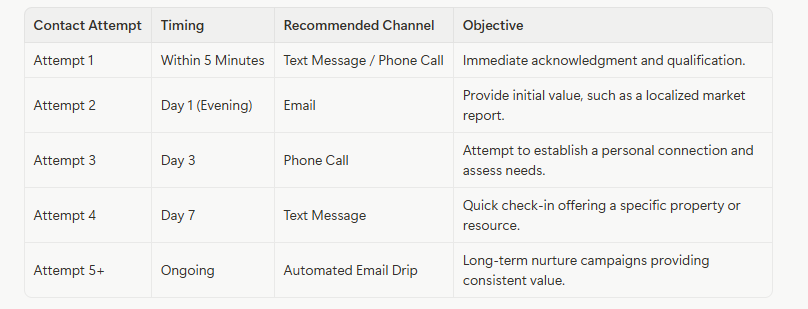
Building a systematic follow-up sequence is essential. This is where your integrated tech stack truly shines. You must create a schedule that includes multiple touchpoints across different channels—phone calls, text messages, and emails—over an extended period.
Cultivating Your Sphere of Influence (SOI)
While converting internet leads is important, the foundation of a sustainable real estate business is your Sphere of Influence (SOI). These are the people who already know, like, and trust you—past clients, friends, family, and community connections.
Referrals remain the number one lead source in the industry, with 66% of sellers finding their agent through a referral or past relationship . Furthermore, referrals boast the highest conversion rates, typically ranging from 14% to 20% .
To organically grow your connections and business over time, you need a clear and workable strategy for nurturing your SOI on an ongoing basis. This requires moving beyond the generic annual holiday card.
Strategies for Engaging Your SOI
- The Quarterly Phone Call: The good old-fashioned phone call remains one of the best tools for nurturing relationships. Aim to call your past clients quarterly. The goal is not a hard sell, but rather to check in, offer assistance, and gently remind them that you are their go-to real estate resource.
- Personalized Text Messaging: Text messaging has a significantly higher open rate than email. Use texts to send friendly hellos, share relevant market updates, or acknowledge personal milestones (like a birthday or "housiversary").
- Value-Driven Email Marketing: Instead of blasting a generic database-wide newsletter, segment your audience and send targeted information. Provide local market updates, hyper-local community news, and personalized one-to-one messages.
- Authentic Social Media Engagement: Being connected on social media is not enough; you must actively engage. Comment on your clients' posts, celebrate their life events, and position yourself as an expert by regularly sharing real estate insights.
Daily Habits of Top Producers
Your tech stack is the engine, and your follow-up system is the roadmap, but your daily habits are the fuel that drives your business forward. The most successful agents do not rely on motivation; they rely on discipline and structured routines.
Top producers treat lead generation and follow-up as non-negotiable appointments on their calendar. They utilize the "Golden Hour"—typically the first hour of the workday—exclusively for proactive prospecting and database management.
Agents who prospect for two or more hours daily produce three times more listings than those who do not . This single habit is the most reliable predictor of production in real estate. During this time, they are making outbound calls, sending personalized text messages, reviewing their CRM for upcoming tasks, and ensuring no lead has fallen through the cracks.
By mastering your follow-up systems and committing to consistent daily habits, you transform your real estate practice from a reactive hustle into a predictable, profitable business. Equip yourself with the right tools, execute your systems flawlessly, and you will build a career that thrives in any market.
References
[1] Real Estate Lead Response Statistics: 15 Numbers Every Agent Should Know in 2026 - AgentZap
[2] 75+ Real Estate Lead Generation Statistics (2026) - Deal Machine OS
[3] How to work your real estate SOI to build the ultimate referral machine - Follow Up Boss